
The commander of United States Africa Command (AFRICOM), General Dagvin Anderson, has confirmed that Washington has pulled back the bulk of the troops it sent to Nigeria earlier this year to support a counterterrorism operation, though intelligence-sharing and other security cooperation between the two countries will continue.
Anderson made the disclosure during a virtual press briefing following the 2026 African Chiefs of Defence Conference in Luanda, Angola. He said the forces deployed specifically for that operation had largely been withdrawn, while the broader partnership Nigeria requested — centered on intelligence sharing and mutual understanding — remains in place.
The general did not disclose how many troops had left, when the withdrawal took place, or which locations in Nigeria had hosted them. Neither Nigeria’s military nor its federal government had commented on the withdrawal by the time of reporting, and AFRICOM itself had not issued a formal public statement on the matter.
Background on the deployment
The US troop presence traces back to early February 2026, when a small American team arrived in Nigeria under an agreement between the two governments. That arrangement followed a US strike on suspected ISIS fighters — militants President Donald Trump described as targeting Christians.
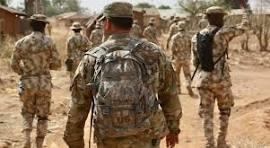
Within weeks, the American footprint had grown to an estimated 200 personnel stationed in north-east Nigeria. The scale of the deployment drew scrutiny at home, with Nigerians questioning the role of foreign forces in the country’s internal security matters. Defence officials sought to reassure the public that US troops would stay out of direct combat, with Defence Headquarters spokesperson Samaila Uba describing their role as limited to training, intelligence sharing, logistics support, and strategic-level dialogue on shared threats like terrorism.
That framing didn’t hold entirely: US forces subsequently joined Nigerian troops in a combat operation that resulted in the death of a senior Islamic State West Africa Province (ISWAP) commander, along with other fighters. The bulk of the joint activity was concentrated in Borno State, the epicenter of Nigeria’s long-running Boko Haram insurgency.
Anderson’s assessment of the partnership
Speaking about how the US supports African-led security efforts more broadly, Anderson pointed to Nigeria as a standout example, noting that the collaboration eventually enabled US and Nigerian forces to jointly target a senior figure within ISIS’s global structure — someone tied to the group’s international operations, propaganda, and recruitment efforts.
He said the resulting operation in the Lake Chad Basin had ripple effects well beyond the immediate region, disrupting the broader ISIS network.
The Luanda conference drew military leaders from 35 African nations alongside US defence officials and representatives from government agencies and private firms, with discussions covering intelligence sharing, defence innovation, counterterrorism, maritime security, and the connection between security and economic development.