
Nigeria has landed one of the most prestigious honors in the international financial intelligence world, in recognition of its efforts to combat money laundering and other financial crimes.
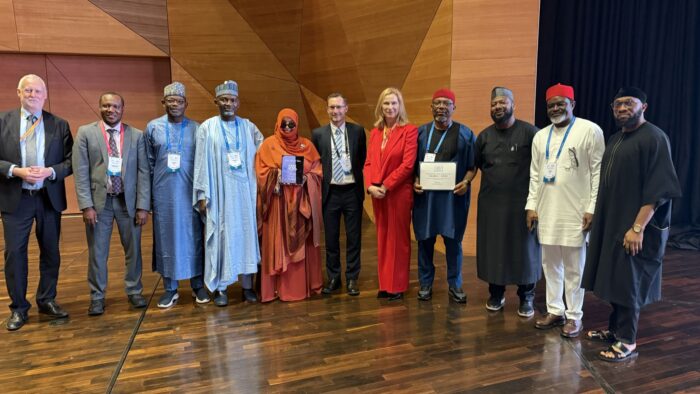
At the 32nd Egmont Group Plenary of Financial Intelligence Unit heads, held in Baku, Azerbaijan, Nigeria was presented with the UNODC–World Bank–Egmont Group Stolen Asset Recovery (StAR) Initiative Award. The event drew top figures in global financial crime enforcement, including new FATF President Giles Thompson.
The StAR award goes to standout cases that show innovation, strong international cooperation, and real, measurable results in the fight against illicit finance. Nigeria’s win centered on a case where intelligence gathered by the Nigerian Financial Intelligence Unit (NFIU) directly supported an investigation carried out by the Economic and Financial Crimes Commission (EFCC) — highlighting how intelligence-gathering and law enforcement can work hand in hand to deliver results, including asset recovery.
Considered one of the highest operational honors a financial intelligence unit can receive, the StAR award specifically recognizes cases where sharing and analyzing financial intelligence has meaningfully advanced investigations, broken up illicit networks, and deepened cooperation between countries’ FIUs.
For Nigeria, the win carries weight beyond bragging rights. It signals that the country can generate intelligence that actually leads to action, that its agencies can work together effectively, and that it’s capable of recovering stolen assets in practice — not just on paper.
NFIU Chief Executive Hafsat Abubakar Bakari called the recognition a proud moment for the country, describing it as confirmation of the strength and professionalism of Nigeria’s intelligence system. She framed the award as proof that well-analyzed, securely shared intelligence can translate into real operational wins — disrupting criminal financial networks and recovering assets for the public. She added that it also reflects Nigeria’s broader contribution to the global fight against money laundering and terrorism financing.
Observers point out that the case underscores how essential inter-agency and cross-border cooperation has become in tackling crime, especially as illicit money moves faster and through more complex channels than ever.