
If someone destroyed your home, killed your loved one and forced your family to run for safety,
how would you feel if that same person later received government-funded rehabilitation instead
of standing trial?
That question stayed in my mind as I followed the latest debate in the National Assembly about
discontinuing the controversial terrorist rehabilitation program.
The particular debate I am talking about took place on Tuesday, July 7, 2026, when lawmakers
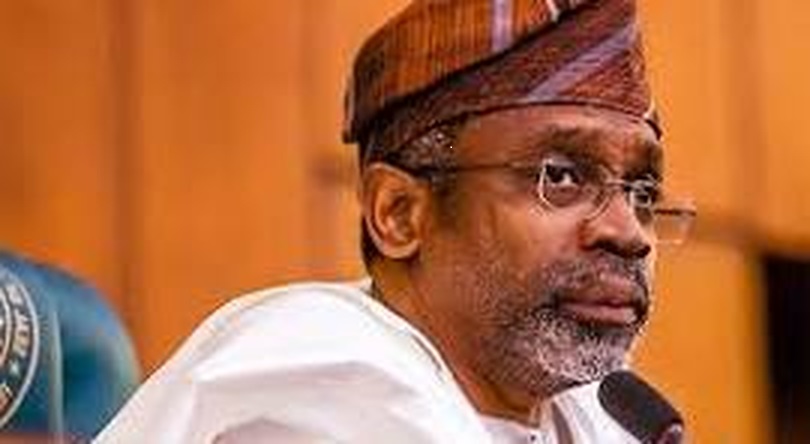
led by Senator Abdulaziz Yar’Adua called on the Federal Government to stop rehabilitating and
reintegrating former Boko Haram members. Instead, they argued that terrorists should face
investigation, prosecution and punishment under Nigerian law.
Their position immediately sparked fresh discussions across the country, with many Nigerians
praising the Senate while others insisted that rehabilitation still has an important role in ending
insurgency.
As I read through the Senate’s arguments, I could understand why the issue has become so
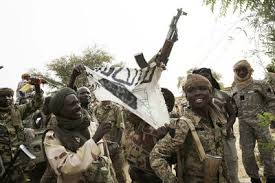
emotional. Through a United Nations publication, I gathered that Boko Haram has displaced
more than 2 million Nigerians, and accounts for over 350,000 official deaths. Many families still
do not know where their loved ones are. And entire communities have struggled to rebuild their
lives.
It’s easy to understand why the terrorist rehabilitation debate is heated, and it prompts me to ask
myself, “but if rehabilitation can help end insurgency, then shouldn’t the program receive proper
funding?”
I got a shocking answer while reviewing interview footage of some Boko Haram victims in the
North. During these interviews, many of the victims claimed that they are still waiting for justice,
compensation and proper support.
That alone explains why emotions run high whenever the rehabiitation programme and the
money being spent on it is mentioned. Because if the government can spend money
rehabilitating outright criminals, why can’t the same resources be channelled towards
compensating those who have been hurt by these very criminals?
This begs another question. Can any country truly heal when many victims still feel forgotten?
The Federal Government has consistently defended Operation Safe Corridor, the programme
created in 2016 to rehabilitate selected former Boko Haram members who voluntarily surrender.
According to military authorities, the initiative aims to weaken terrorist groups by encouraging
defections. Officials say participants go through psychological counselling, religious
reorientation, education and vocational training before being returned to society.
From a military point of view, I understand the argument. If more fighters surrender instead of
continuing to attack communities, fewer soldiers and civilians may lose their lives.
Several countries facing insurgencies have adopted similar approaches alongside military
operations. But as I continued reading official documents and following expert opinions, another
concern became impossible to ignore. Many Nigerians simply do not know enough about how
the programme works!
Who decides which former fighter qualifies for rehabilitation? What crimes automatically lead to
prosecution instead? How thorough is the screening process? How often are communities
consulted before former insurgents return?
These are not unreasonable questions. They are questions taxpayers deserve answers to.
The more I looked into this issue, the more I realised that public distrust is not driven only by the
programme itself. It is also driven by a lack of transparency.
Could better transparency have prevented much of the public anger we see today?
Another issue that stood out during my research was the voice of victims. I came across reports
of displaced families struggling to rebuild their lives years after attacks. Many still depend on
humanitarian assistance. Many children lost their parents. Many parents lost their children. And
some survivors still battle emotional trauma long after the gunfire stopped.
Speaking of trauma, after interviewing a few individuals who have chosen to remain
anonymous, many swore that they would never visit or live in the North, due to what they (or
someone they know) have suffered at the hands of terrorists.
As a Nigerian, I can understand why many people struggle to accept headlines about
rehabilitation when countless victims are still waiting for meaningful government support.
Whether that perception tells the whole story or not, it has become part of the national
conversation.
The Senate appears to share some of those concerns. Lawmakers argued that rehabilitation
should not replace justice. They insisted that those responsible for acts of terrorism should
answer for their actions in court instead of simply returning to civilian life.
That argument carries weight. Justice is one of the foundations of every democratic society.
When people lose confidence that justice is being served, trust in public institutions begins to
weaken.
At the same time, I also found another side of the debate that deserves attention.
Counterterrorism experts often argue that defeating insurgency requires more than military force
alone. They say encouraging defections can reduce violence, provide intelligence and weaken
terrorist organisations from within.
So where does that leave Nigeria?
That is where I believe the real conversation should begin.
Instead of asking whether rehabilitation is entirely good or entirely bad, perhaps we should ask
whether Nigeria has built enough safeguards around the programme.
What if the real problem is not rehabilitation itself, but the way it is managed and explained to
the public?
One issue I found particularly alarming is the amount of money that had been spent on terrorist
rehabilitation. While reading an article published in a popular Newspaper, I discovered that the
Nigerian government has spent over N604,000,000 (Six hundred and four million Naira) on its
terrorist rehabilitation program.
This amount of money certainly raised eyebrows among the individuals I interviewed. While
some felt that such a large sum should have been spent on compensating victims, others gave off cheeky laughs, insinuating that the whole thing was a scam. Being a Nigerian myself, and
going by our long history of corrupt leadership, I wouldn’t blame Nigerians for feeling that way.
But while public suspicion of embezzlement alone is not proof of wrongdoing, the government
should recognise that a lack of transparency creates room for rumours.
If public money is funding rehabilitation programmes, then Nigerians deserve regular public
reports containing detailed breakdowns of how, where, and to whom these monies are being
disbursed.
Now, after assessing the argument from both ends, I believe that if terrorist rehabilitation must
continue, then support for victims should become even more visible
Just imagine losing your family, your business and your home because of terrorism. Years later,
you are still struggling to survive while the government is spending hundreds of millions on
former insurgents. That will never sit well with victims.
Even if the government is helping victims behind the scenes, many Nigerians do not see enough evidence of that support. That is also something they should work on.
As I finished reviewing the available reports, I came away with one conclusion. Nigeria should
not be forced to choose between security and justice. A responsible government should pursue
both with equal determination.
Former insurgents who qualify under clearly defined legal standards can still undergo
rehabilitation where appropriate. But those accused of committing serious crimes should face
transparent investigations and due process. At the same time, victims should receive the
attention, care and support they deserve.
The Senate’s latest intervention has reopened an important national conversation. What
happens next will shape public confidence for years to come.
Nigeria has paid far too high a price for terrorism to allow uncertainty and secrecy to dominate
such an important programme.
Every naira spent out of the N604,000,000 terrorist rehabilitation program should be accounted
for.
Every participant should pass through a transparent process.
Every victim should know that their pain has not been forgotten.
Only then can rehabilitation become part of a broader system of justice instead of appearing to
replace it.
And only then will Nigerians view the Operation Safe Corridor program as legit, and not another
means for corrupt government officials to loot.
Amechi Okoli is based in Lagos.