By Tony Ademiluyi
Core content
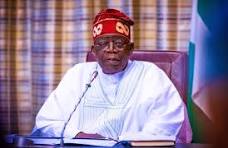
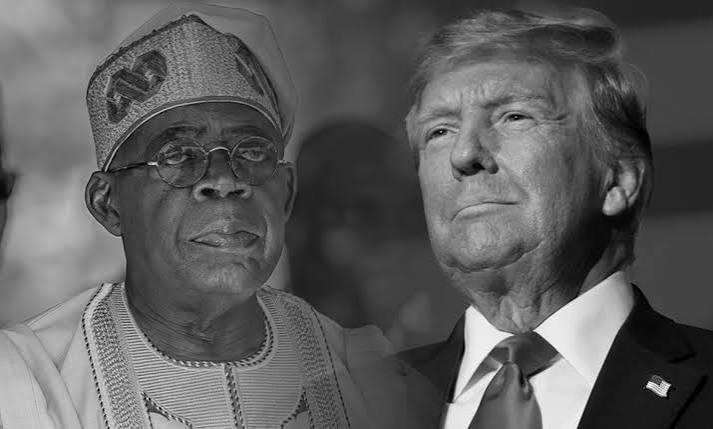
The piece reports that President Trump sent a personal letter to President Tinubu praising Nigeria’s counterterrorism efforts and confirming that US Special Operations Forces, including Navy SEAL Team 6, have been deployed to train Nigerian forces. The letter, dated July 6, 2026, frames this support explicitly around protecting communities of faith, particularly Christian minorities, from jihadist violence. This is presented as the first public confirmation from Trump himself linking the deepening US military presence in Nigeria to that stated rationale.
What’s newsworthy here
Three things stand out. First, the specificity of the military commitment — naming an elite unit like SEAL Team 6 rather than speaking generically about “advisors” — signals a much deeper operational involvement than prior US engagement, which the article notes had previously been limited to sanctions, intelligence sharing, and capacity building. Second, the timeline: this builds on a “2026 Defence Cooperation Roadmap” that emerged from a Joint Working Group formed in November 2025, suggesting a structured, months-long institutional process rather than an ad hoc response. Third, the article ties this to a concrete battlefield outcome — the May 16, 2026 operation in the Lake Chad Basin that reportedly killed ISWAP’s second-in-command and roughly 40 lieutenants, followed by a claim that around 175 ISWAP/Boko Haram militants have been killed since joint operations began.
The political framing and its tension
The most consequential thread in this article is the “Christian persecution” framing. Trump designated Nigeria a “Country of Particular Concern” on October 31, 2025, citing killings and persecution of Christians. Tinubu’s government has publicly pushed back on this characterization, and the article notes that the Federal Government maintains both Muslims and Christians have been victimized by Boko Haram, ISWAP, and armed bandits. This creates a real tension worth flagging: the diplomatic and military cooperation being celebrated in this letter rests on a contested premise. Nigeria’s insurgency is widely understood by analysts and Nigerian officials as a multi-causal conflict — driven by jihadist ideology, but also banditry, resource competition, weak governance, and ethnic/communal conflict that affects both religious communities. A framing that singles out Christian persecution as the primary driver of the security response, while contested domestically, may be more useful to the Trump administration domestically (fitting a narrative about global Christian persecution) than analytically precise about Nigeria’s actual conflict dynamics. Readers should treat the “Christian persecution” lens as a political framing device that Nigeria’s own government disputes, not settled fact.
Sourcing considerations
It’s worth noting the article’s evidentiary basis. The account of the letter comes via Tinubu’s own Special Adviser on Information and Strategy (Bayo Onanuga) — a government spokesperson with an obvious interest in publicizing a flattering letter from a US president and emphasizing tangible security wins. The claim about SEAL Team 6’s direct involvement in the Lake Chad Basin operation is attributed to “a military source cited by The New York Times” — a secondhand sourcing chain (this outlet citing NYT citing an anonymous source) that warrants some caution, particularly regarding operational specifics like unit identity, casualty figures, and the “three-hour assault” details. Casualty figures from counterterrorism operations in contested regions are also historically difficult to verify independently and often originate from the military conducting the operation.
Strategic and regional implications
If accurate, direct SEAL Team 6 involvement in ground operations (rather than training/advisory roles alone) would represent a significant escalation of US military commitment in West Africa, a region where Washington has generally preferred a lighter footprint compared to the Middle East. This could reflect broader US strategic interest in countering jihadist expansion in the Sahel and Lake Chad Basin, where French forces have withdrawn from several countries in recent years, leaving a security vacuum that Russia’s Wagner-successor forces and others have partially filled. A deeper US-Nigeria security partnership could be read as competing for regional influence, not just fighting terrorism.
What’s missing from the article
The piece doesn’t address several relevant questions: What are the terms of the Defence Cooperation Roadmap beyond broad description? What oversight or rules of engagement govern US forces operating in Nigeria? How does the Nigerian public or opposition view this deepening foreign military role, given historical sensitivities around sovereignty? And what independent verification exists for the reported casualty figures?
Bottom line
This is essentially a government-relations story — a diplomatic letter being publicized to project a successful bilateral partnership and a narrative of counterterrorism progress — layered onto a genuine and significant increase in US military involvement in Nigeria. The military cooperation appears real and substantial; the “Christian persecution” framing driving US involvement remains a politically contested characterization that Nigeria’s own government rejects, and the specific operational and casualty claims rest on sourcing that would benefit from independent corroboration.