
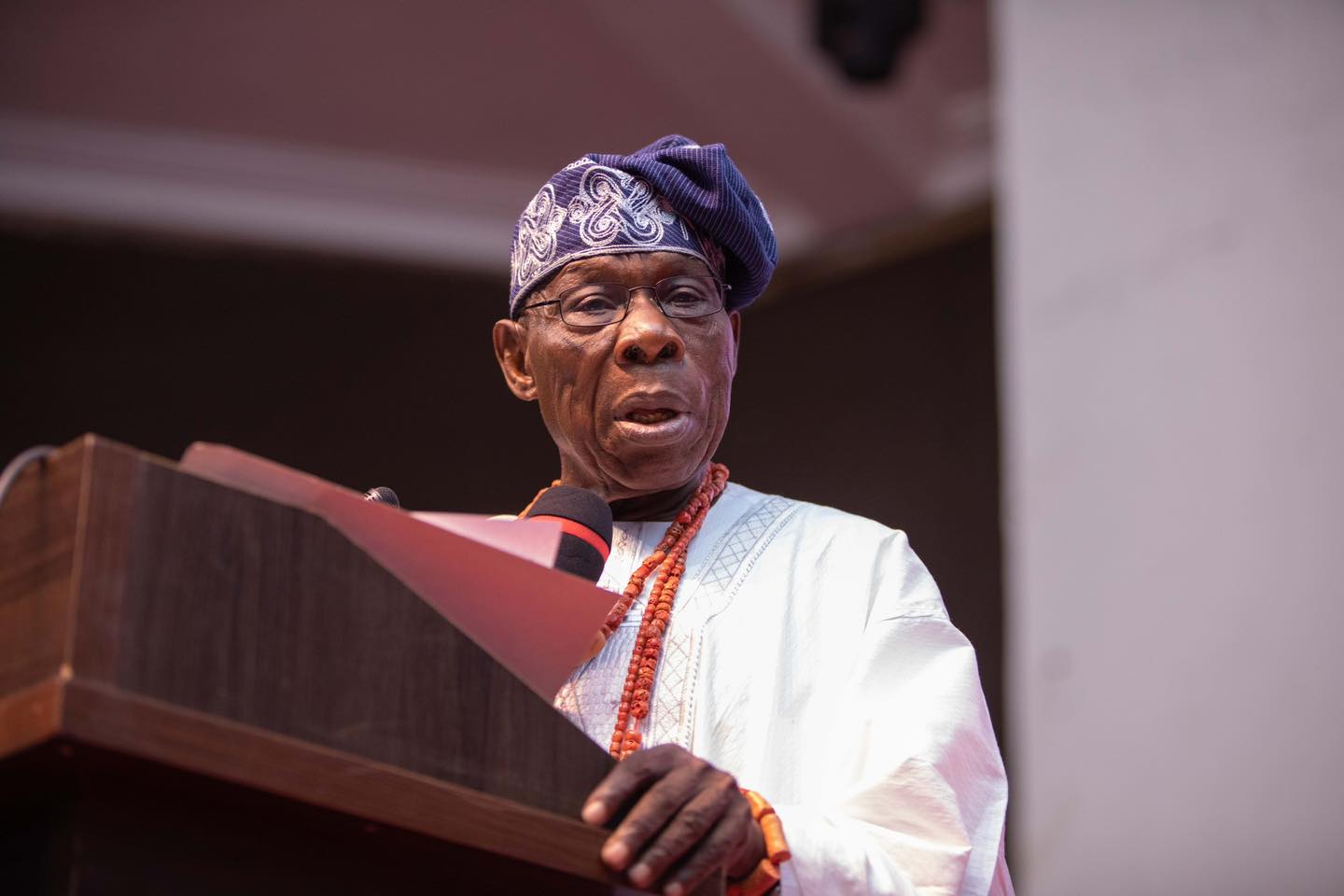
By Tony Ademiluyi
This exchange is less about historical fact-finding and more about legacy management — two elder statesmen in their twilight years fighting to control how a defining chapter of Nigerian democracy is remembered before it’s written into history permanently.
The stakes for both men. Osoba and Obasanjo represent competing narratives about the collapse of the Yoruba political consensus that produced Obasanjo’s 1999 presidency. The Alliance for Democracy was the dominant Yoruba party of the Fourth Republic’s early years, built on Afenifere’s political base. By 2003, AD had been nearly wiped out in the South-West, losing governorships it had swept in 1999. For someone like Osoba, who lost his own seat, that defeat has never stopped stinging — and pinning it on deception by a fellow Yoruba man he helped install in power is a way of externalizing that loss. For Obasanjo, being cast as the man who betrayed his own kinsmen’s political movement cuts against the reconciliatory, nation-building image he has spent decades cultivating in his post-presidency writing and public statements.
Obasanjo’s defense strategy is threefold. First, he relocates blame temporally and structurally — arguing the critical 1999 negotiations were conducted by “senior Afenifere and AD leaders,” not Osoba directly, which lets him dismiss Osoba’s account as secondhand rather than eyewitness testimony. This is a classic move in memoir disputes: discredit the standing of the accuser to speak on the matter at all.
Second, he reframes his post-1999 outreach to AD as strength rather than calculation. Whether courting AD/PDP cooperation was magnanimous statesmanship or a strategy to neutralize a regional rival is genuinely a matter of interpretation — and conveniently, “strength” is an unfalsifiable claim about intent that no documentary record can easily rebut.
Third, and most consequential, is his selective concession on 2003. By admitting that results in one state were “murderously changed” while insisting the other five reflected genuine electoral will, Obasanjo does something rhetorically clever: he sounds forthright and even self-critical, while actually conceding almost nothing. It allows him to appear transparent without retracting his central claim that AD’s collapse was organic rather than engineered — a claim many independent election observers and historians of that period have long disputed, given widespread reports of PDP-orchestrated rigging across the South-West in 2003.
The Na’Abba tangent is telling. Bringing up the attempted impeachment of Ghali Na’Abba — a fight that was ostensibly separate from the AD dispute — suggests Obasanjo is using this letter to relitigate his entire first term’s controversies in one sweep, not just the specific accusation Osoba made. This is a pattern common to elder Nigerian politicians’ public letters: once the gloves come off, old grievances get bundled together for a comprehensive rebuttal, even when it dilutes the response to the actual charge at hand.
The conciliatory close is not incidental. Ending with praise for Osoba’s role in securing land for the Obasanjo Presidential Library is a calculated softening. It signals that this is a disagreement about history and interpretation, not a personal rupture — useful for a man whose brand depends partly on being seen as a unifying elder statesman, not someone who burns bridges over old political scores. It’s also a subtle reminder of debt: Osoba did Obasanjo a favor once, and the letter gestures at that as a kind of counterweight to the charge of betrayal.
What this reveals more broadly. These exchanges matter less for settling what “really happened” in 2003 — the documentary record and independent assessments already offer plenty of material on that — and more for what they say about how Nigeria’s political class processes its own history. Rather than truth commissions or institutional accountability, disputed elections and power realignments get relitigated decades later through open letters between aging principals, often for an audience of political heirs and party loyalists still invoking these events to justify present-day alignments. The fact that this fight is happening in 2026, over events from 2003, underscores how unresolved and personally held these grievances remain in Nigerian political memory — and how much power still rests in the hands of a small circle of veterans who can still command national headlines with a single letter.